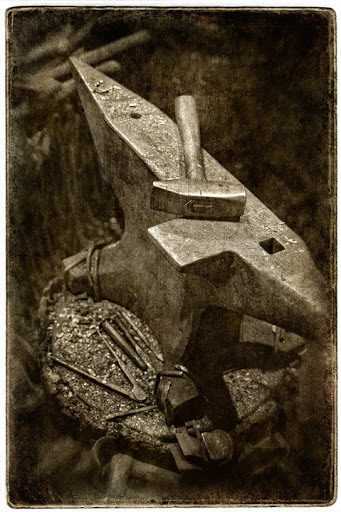
(Photograph copyright 2010 by Dan Routh)
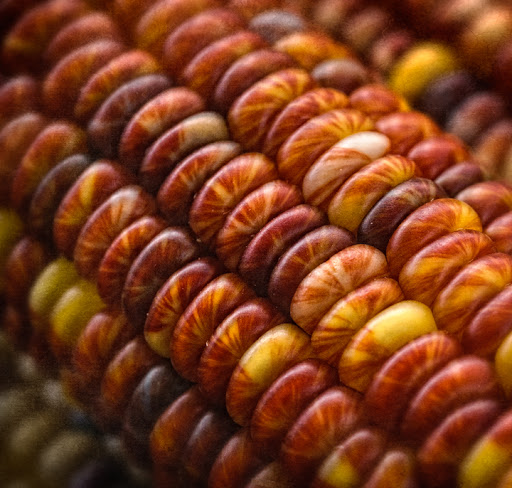
Still-life from Mill Creek Forge, near Seagrove, North Carolina.
Commercial, Advertising and Editorial Photography. Greensboro, North Carolina
(Photograph copyright 2010 by Dan Routh)
Still-life from Mill Creek Forge, near Seagrove, North Carolina.
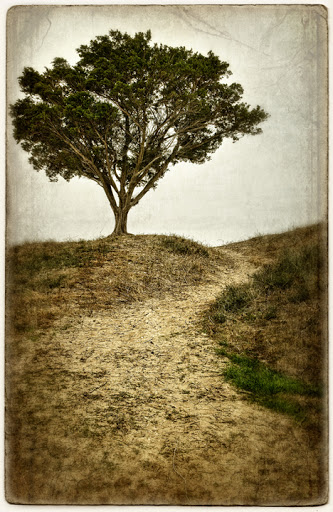
(Photograph copyright 2010 by Dan Routh)
Lone tree, Fort Fisher, near Wilmington, North Carolina.
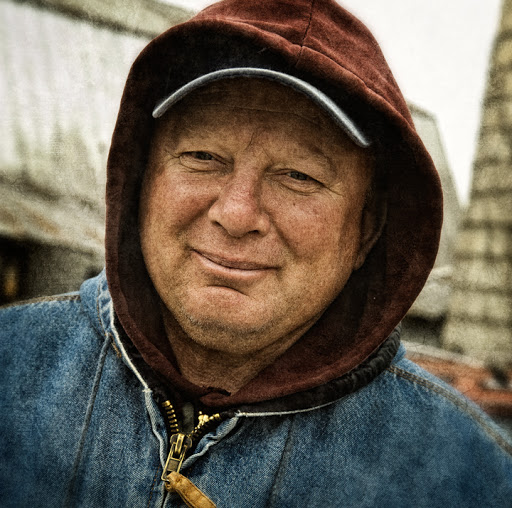
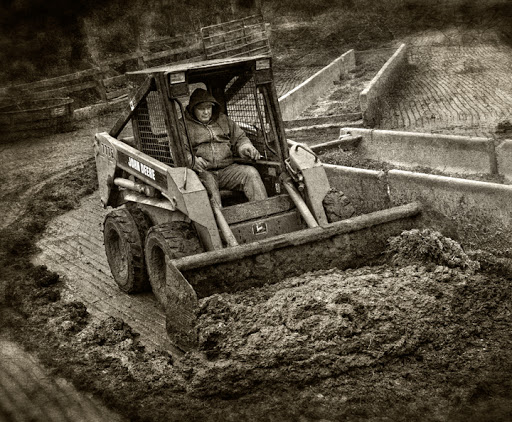
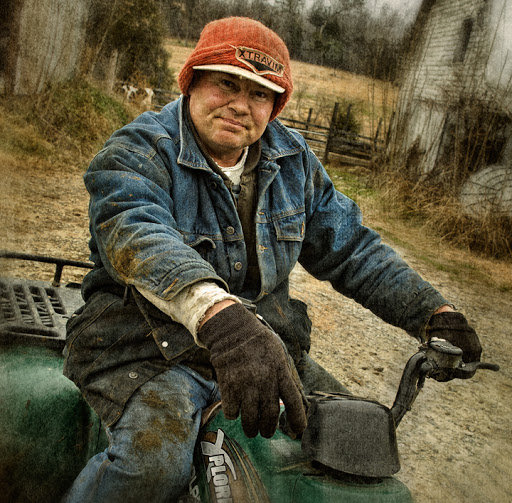
It’s a Saturday afternoon and there is a light rain/sleet falling. Most of us are either out shopping at the mall or sitting in a warm place watching football or basketball. At Williams Dairy in Grays Chapel, North Carolina, for Greg, Rick and Michael Williams, Saturday means cleaning up the cow lot and getting things ready for milking a herd of Holsteins no matter what the weather.

(Photograph copyright 2010 by Dan Routh)
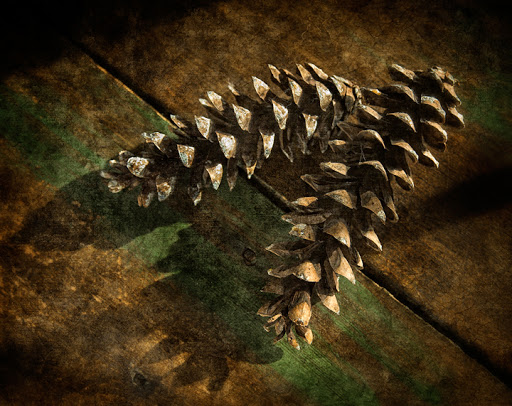
Still-life photograph of Eastern White Pine cones.
(Photograph copyright 2010 by Dan Routh)
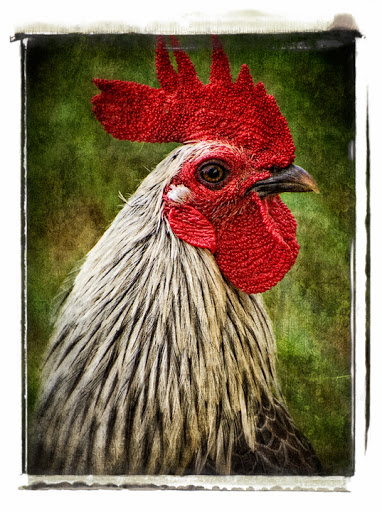
Dominecker rooster, Grays Chapel, North Carolina.
(Photograph copyright 2010 by Dan Routh)
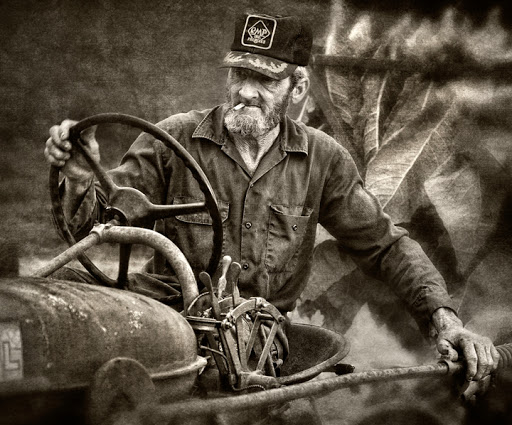
Neighbor Gary McMasters in the tobacco field earlier the year.
(Photograph copyright 2010 by Dan Routh)
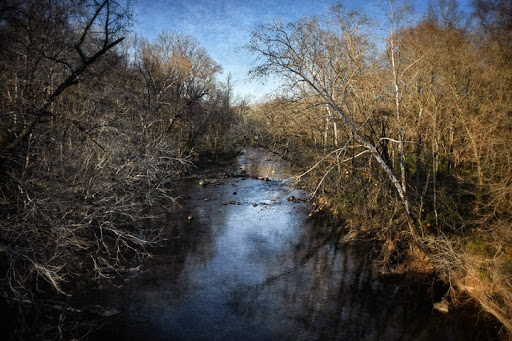
If you stand on the bridge over Deep River on Hinshaw Town Rd in southeastern Randolph County, North Carolina, and look north, you see a tranquil yet nondescript scene. Nothing special is there to let you know that this is probably the most historically rich spot in Randolph County. Within just a mile or so from this spot are the Hinshaw farm and Evergreen Academy I posted about in an earlier blog post, as well as Cox’s Mill, the last intact water powered grist mill in the county. Closer still are two eighteenth century mill sites, an eighteenth century sawmill site, and at least 3 bridge sites. Buffalo Ford was a major crossing point of the Deep River on the route from Hillsboro to South Carolina, and in 1780, several thousand American Continental troops were camped here for several weeks when General Horatio Gates took command at this spot and then marched his army south to the ill-fated Battle of Camden. In 1781, Tory leader David Fanning’s base camp was located here from which he raided patriot forces in the neighboring areas. That’s a lot of history in a very compact area. That’s the up side. Ask most folks in Randolph County if they have any idea that Buffalo Ford exists, and most won’t know what I’m talking about. That’s the downside. Pity.
(Postscript: The name Buffalo Ford comes from the fact that in the 18th century, there were native bison still alive in the area.)

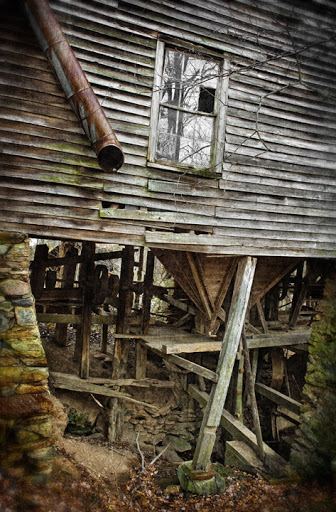
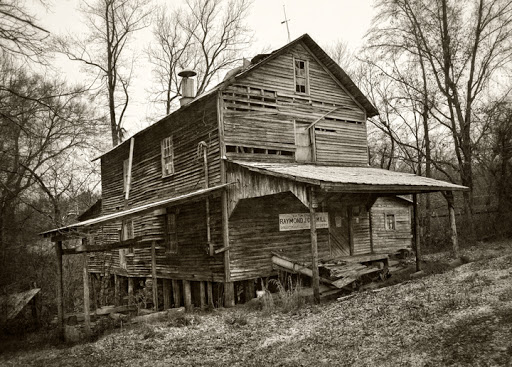
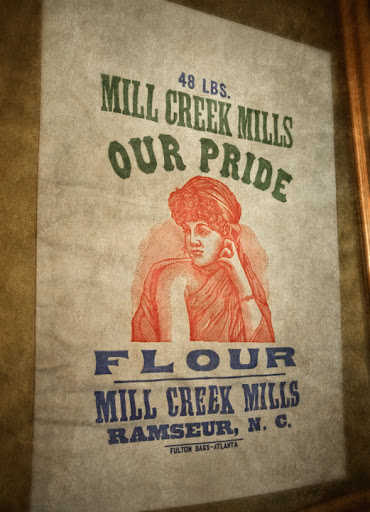
A mile or so from the Hinshaw Barn near Buffalo Ford on the Deep River in Randolph County, North Carolina is Cox’s Mill, the last intact water powered grist mill in the county and one of the last in the state. Built around 1900 on Mill Creek by a Beane, it was run by several different millers during it’s history. It sits adjacent to an 18th century mill site also called Cox’s mill. Raymond and Flossie Cox ran the mill from 1938 till around 1983, grinding flour and cornmeal and then feed, using water for power till 1953 and then converting to diesel and electricity. The mill is closed now, but all of the equipment is still on site and intact including the wheel.
I stopped by the mill on a snowy day to take a couple of photographs and spoke to Miss Flossie as she is called. She talked about the history of the mill she and her husband worked for over 40 years (and she worked the equipment beside her husband Raymond) and she told me of some of the other folks who were connected to it. I found out her mother was my great aunt’s sister; small world. Then she told me that John Routh also once ran the mill. I was floored. John was my great grandfather and I live in his house. I knew he was a miller all his life, but never knew his connection with this mill.
I don’t know how long Cox’s Mill will remain. Though intact, the roof is failing and the creek is slowly eating away at it’s foundation. Unless someone restores it, and that’s not likely, it will soon disappear and along with it the last chapter of a part of Randolph County history.


Flossie and Raymond Cox (Photo courtesy of Flossie Cox)
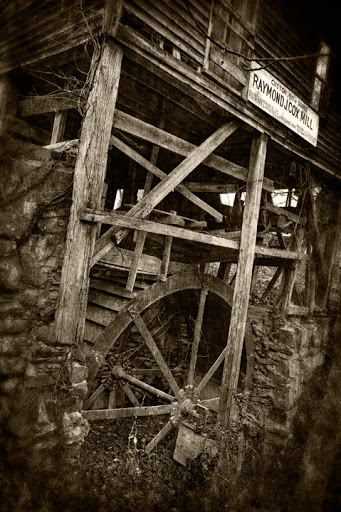
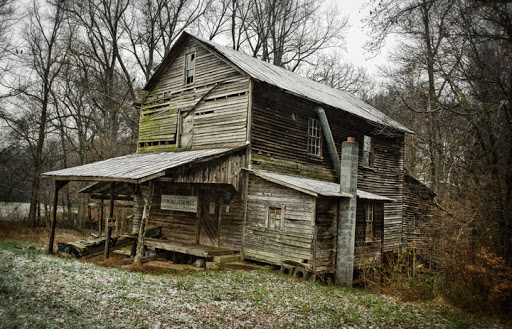
(Photographs copyright 2010 by Dan Routh)
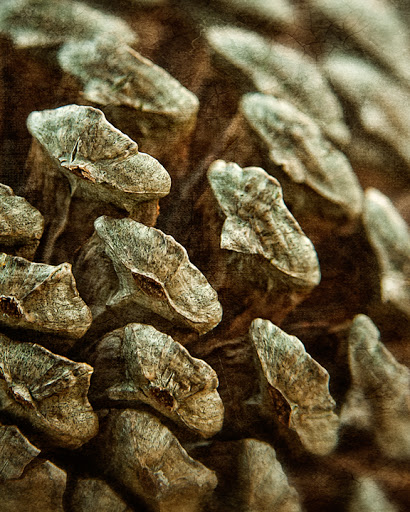
(Photograph copyright 2010 by Dan Routh)
Detail of a Southern Yellow Pine cone.

