House in the Horseshoe

(photograph copyright 2011 by Dan Routh)
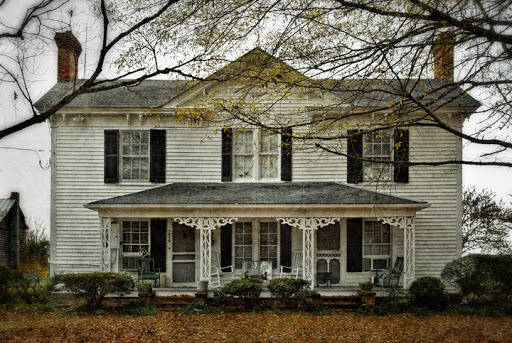
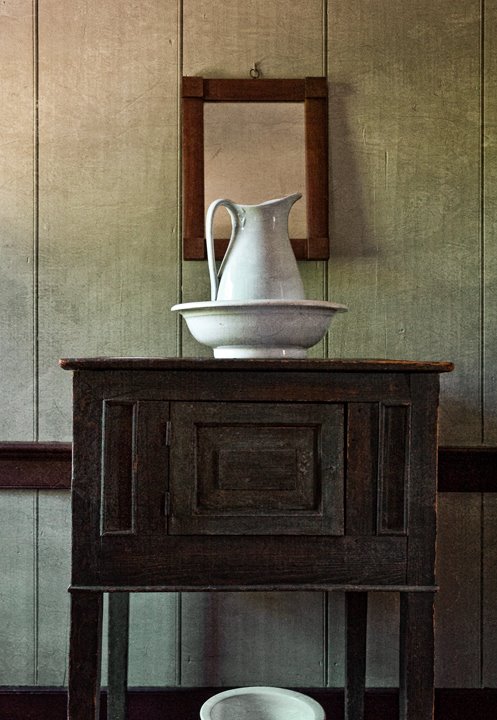
Still life from the Alston House near Sanford, North Carolina. Also known as the House in the Horseshoe, because it sits in a horseshoe bend of Deep River, the house was the scene of a Revolutionary War skirmish between patriots under Col. Phillip Alston and Tory troops under David Fanning in July 1781. The house still has bullet holes on the front porch from the battle.

Millboro, along the old Railroad Spur

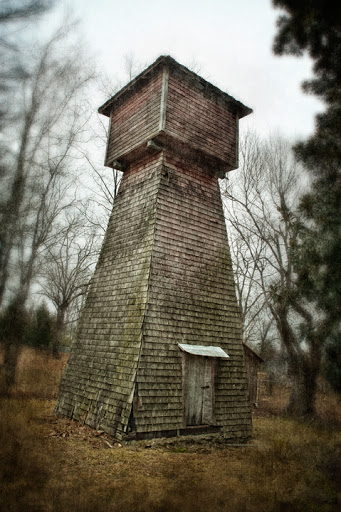
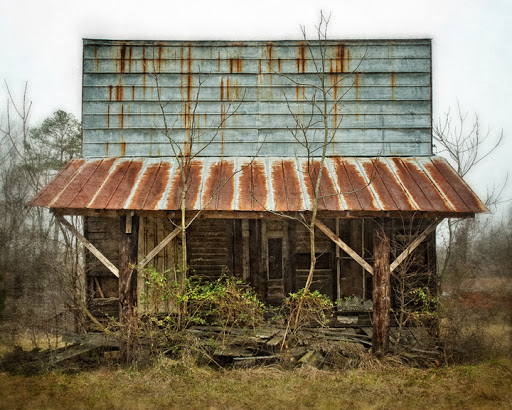
I’m continuing my posting today with more architectural shots. Millboro is a community near my home in Grays Chapel, North Carolina that grew up on a spur line of the Cape Fear and Yadkin Valley Railroad as a supply point for local textile mills. The railroad also provided access for rich Northerners to bring their private railroad cars for bird hunting in the 1920s at the Halliday Hunting Lodge. The shot above is of a wooden water tank used at the hunting lodge and the image below is of the old Millboro Store.
As I wander around Randolph County, I use a copy of a book, “Architectural History of Randolph County, N.C.” written by attorney and friend Mac Whatley. It is an extensive guide of the interesting and important buildings in the county. Unfortunately, Mac wrote the book in 1985 and as I search for many of the structures, I learn that more and more of them no longer exist. It’s amazing how fast these great pieces of architecture can disappear. I haven’t counted, but as many as half or more of the structures in the book are gone. In addition, the railroad line that once ran through Millboro is itself gone, having been torn up and removed several years ago.

(Photographs copyright 2011 by Dan Routh)

Buffalo Ford

(Photograph copyright 2010 by Dan Routh)

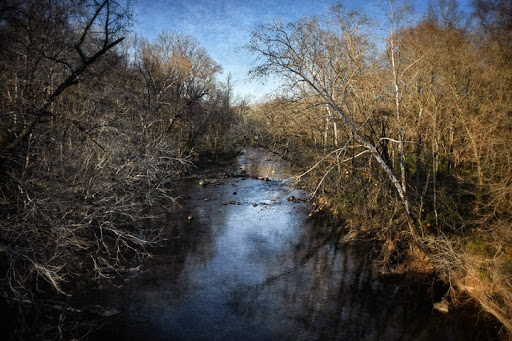
If you stand on the bridge over Deep River on Hinshaw Town Rd in southeastern Randolph County, North Carolina, and look north, you see a tranquil yet nondescript scene. Nothing special is there to let you know that this is probably the most historically rich spot in Randolph County. Within just a mile or so from this spot are the Hinshaw farm and Evergreen Academy I posted about in an earlier blog post, as well as Cox’s Mill, the last intact water powered grist mill in the county. Closer still are two eighteenth century mill sites, an eighteenth century sawmill site, and at least 3 bridge sites. Buffalo Ford was a major crossing point of the Deep River on the route from Hillsboro to South Carolina, and in 1780, several thousand American Continental troops were camped here for several weeks when General Horatio Gates took command at this spot and then marched his army south to the ill-fated Battle of Camden. In 1781, Tory leader David Fanning’s base camp was located here from which he raided patriot forces in the neighboring areas. That’s a lot of history in a very compact area. That’s the up side. Ask most folks in Randolph County if they have any idea that Buffalo Ford exists, and most won’t know what I’m talking about. That’s the downside. Pity.

(Postscript: The name Buffalo Ford comes from the fact that in the 18th century, there were native bison still alive in the area.)

Cox’s Mill

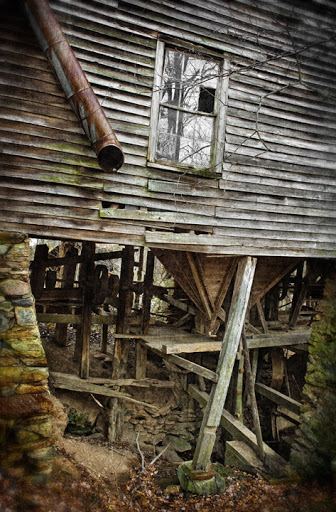
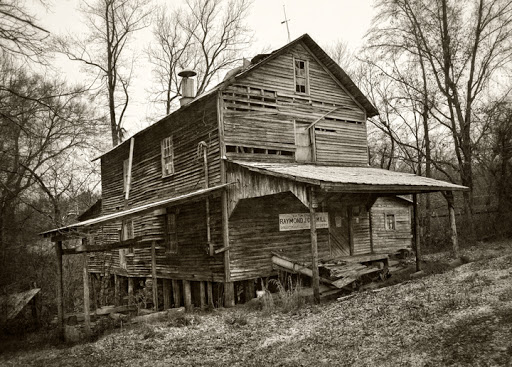
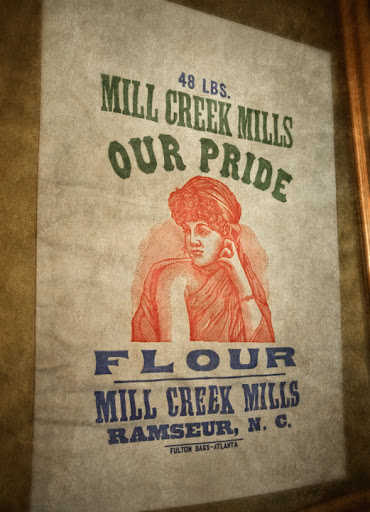
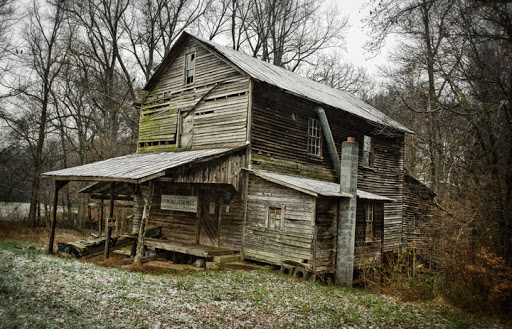
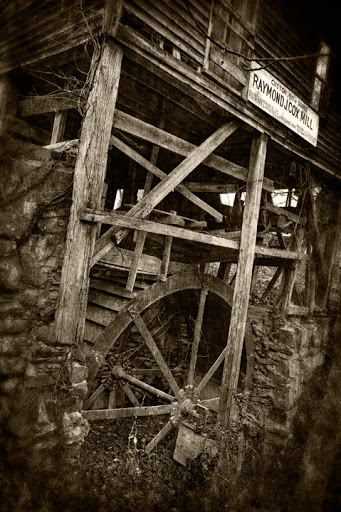
A mile or so from the Hinshaw Barn near Buffalo Ford on the Deep River in Randolph County, North Carolina is Cox’s Mill, the last intact water powered grist mill in the county and one of the last in the state. Built around 1900 on Mill Creek by a Beane, it was run by several different millers during it’s history. It sits adjacent to an 18th century mill site also called Cox’s mill. Raymond and Flossie Cox ran the mill from 1938 till around 1983, grinding flour and cornmeal and then feed, using water for power till 1953 and then converting to diesel and electricity. The mill is closed now, but all of the equipment is still on site and intact including the wheel.

I stopped by the mill on a snowy day to take a couple of photographs and spoke to Miss Flossie as she is called. She talked about the history of the mill she and her husband worked for over 40 years (and she worked the equipment beside her husband Raymond) and she told me of some of the other folks who were connected to it. I found out her mother was my great aunt’s sister; small world. Then she told me that John Routh also once ran the mill. I was floored. John was my great grandfather and I live in his house. I knew he was a miller all his life, but never knew his connection with this mill.

I don’t know how long Cox’s Mill will remain. Though intact, the roof is failing and the creek is slowly eating away at it’s foundation. Unless someone restores it, and that’s not likely, it will soon disappear and along with it the last chapter of a part of Randolph County history.

Flossie and Raymond Cox (Photo courtesy of Flossie Cox)

(Photographs copyright 2010 by Dan Routh)
Amos Hinshaw Barn Details

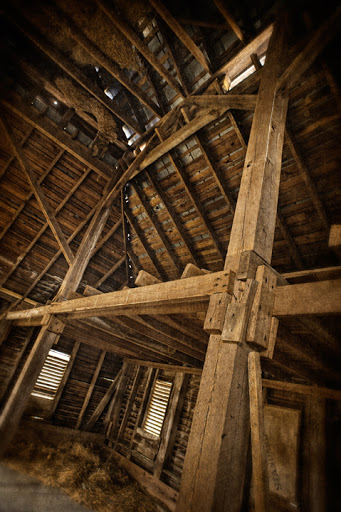
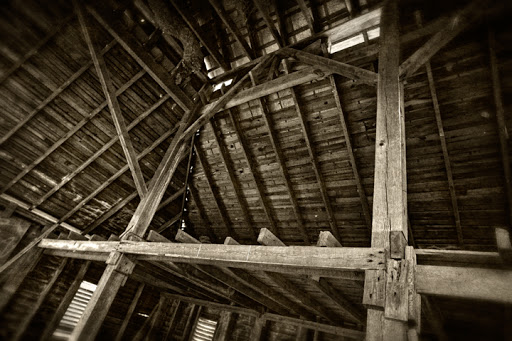
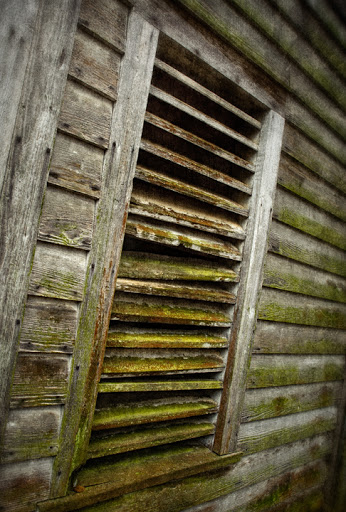
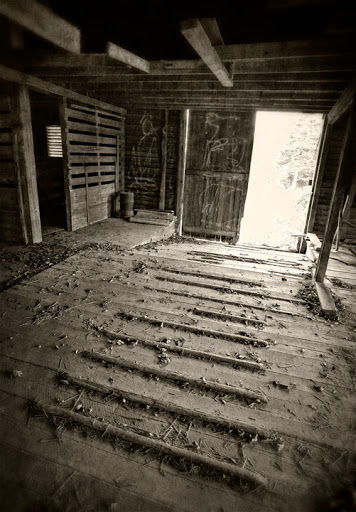
I continue today with some interior and detail views of the Amos Hinshaw barn in southern Randolph County, North Carolina. Built sometime around 1880, the design is of a type not normally seen locally with it’s massive two story design and brick ramp leading into the second story.

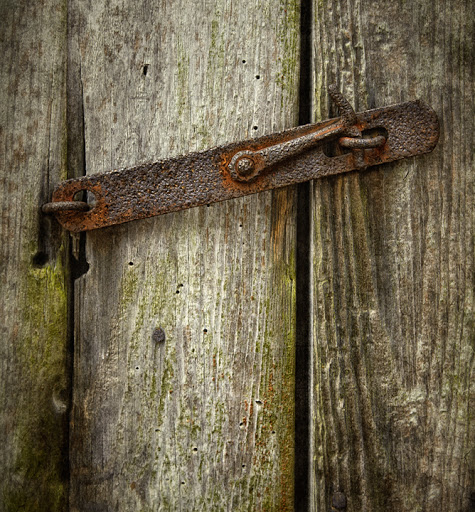
Latch detail.

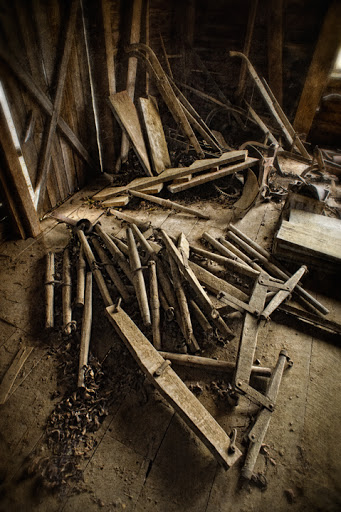
A pile of horse “single trees” along with plows and implements on the ground floor where livestock was housed and equipment stored.

Notice the strips of wood on the floor of the barn ramp to provide traction for the horses/mules bringing hay into the loft.

(Photographs copyright 2010 by Dan Routh)
Amos Hinshaw Barn Exterior

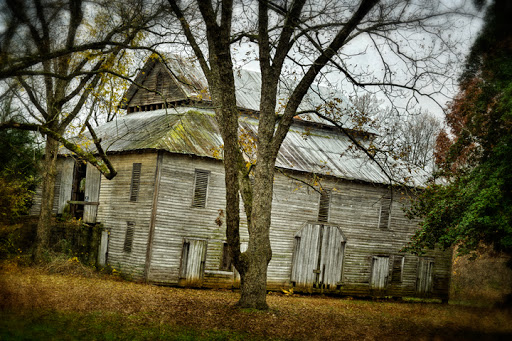
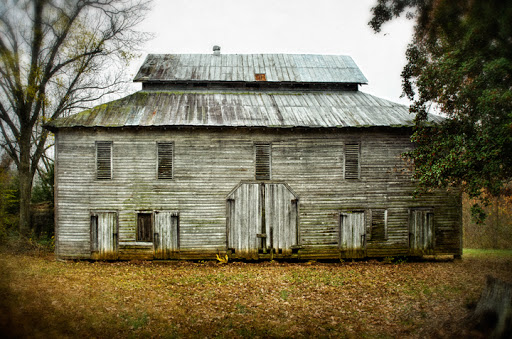
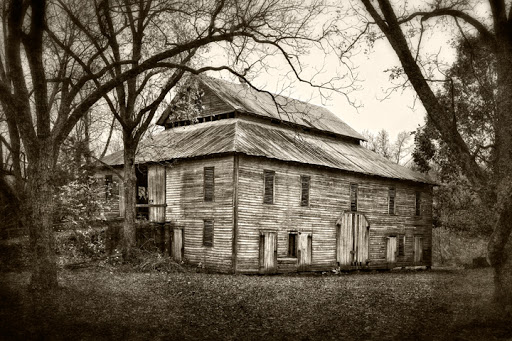
Across the road from the Evergreen Academy is still another gem of Randolph County, North Carolina historical architecture, the Amos Hinshaw barn. Built sometime around 1880 by Quaker farmer Amos Hinshaw, it is like no other barn in the county with it’s massive construction and a brick ramp leading to the second floor loft to enable wagons to drive in with hay. The plan is based on Swiss style barns seen in Indiana by Amos’s father Thomas during the Civil War. The story of why Thomas was in Indiana is a fascinating one and can be read in the following genealogy link. http://www.rawbw.com/~hinshaw/cgi-bin/id?326

(Photographs copyright 2010 by Dan Routh)
Evergreen Academy

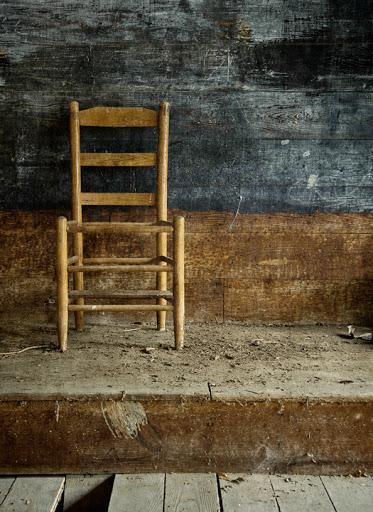
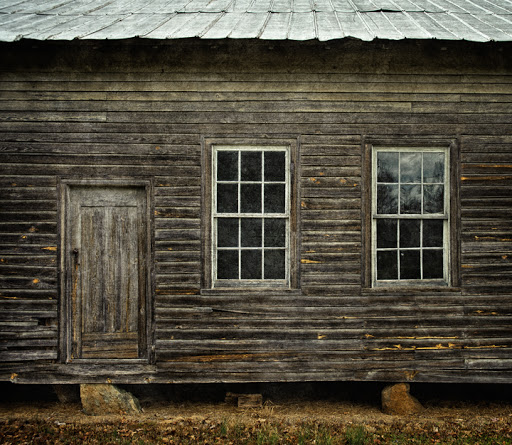
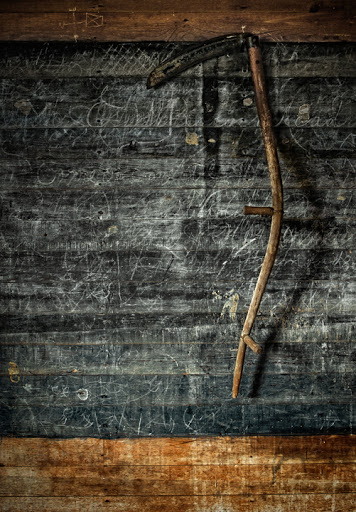
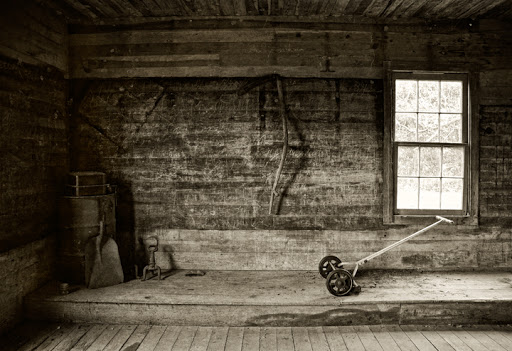
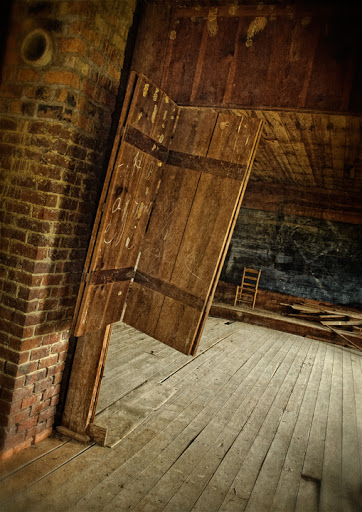
Located in southern Randolph County, North Carolina, Evergreen Academy is a one room school house built by the Quakers shortly after the Civil War. It remained in use until sometime around the 1920’s. I say one room, although there is a folding door system that will convert the main area into two spaces. While all the desks and other artifacts have been removed (except for the lone chair above and a few boards and tools), the school building has been basically untouched since it was last used. As one with a background in archeology, stepping through the door is about as close to a King Tut moment as I will ever have. I walked in and immediately saw the chalk letters on the boards that are one hundred years old and remain unchanged since the moment they were written. It was like opening a time capsule. The writing is on blackboards. I use the plural, because there is no slate, but rather the wall boards are painted black. Standing in front of the boards, you can almost hear the children that once studied here.

(Photographs copyright 2010 by Dan Routh)
Photographs of History

(Photograph copyright 2010 by Dan Routh)
Before I went to photography school, I received a degree in Anthropology and Archeology. As I wander around looking for opportunities for photographs, the historian in me sometimes comes out. Last week I happened upon a couple of fascinating historical locations in southern Randolph County, North Carolina. I had the chance to look inside the Evergreen Academy, an original Quaker schoolhouse built just after the Civil War and an adjacent property, the Amos Hinshaw barn, built sometime around 1880. I will be sharing images over the next few days.

Mast General Store


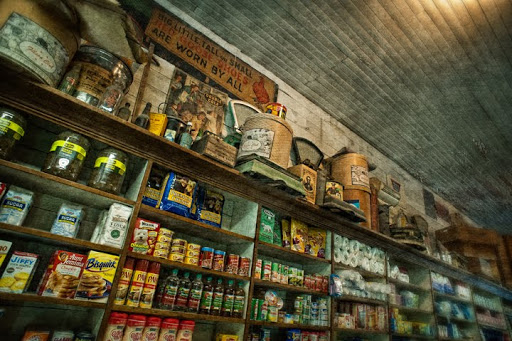
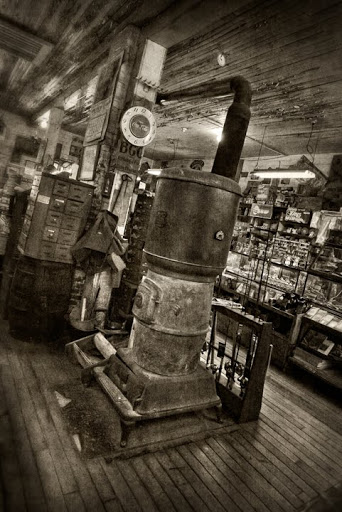
I was on a trip to Grandfather Mountain recently to shoot a job and I dropped by the Mast General Store in Valle Crucis, North Carolina. This particular location is the original store location for what is now a small chain of several stores in western North Carolina and Tennessee, most in historical buildings that sells vintage-type products and clothing. The original store opened in 1882 and was run by the Mast family from 1913-1973 as a general mercantile store and post office serving the area in and around Valle Crucis. Like most general stores, Mast carried almost every type of goods needed by the local community, from dry goods to feed, hardware, and even caskets. It was also the local Post Office and of course, a social gathering place.

Mast has always been special to me. As a young Boy Scout, my Assistant Scoutmaster, Melvin Ward took us yearly on a camping trip to what is now Beech Mountain to camp on his relative’s farm before Beech became a developed ski area. We always stopped by Mast on the way up the mountain to purchase our food for the trip, canned beans, sardines, and the like. I saw the store as it was originally, and I will always remember looking at all the merchandise they carried and the big pot-bellied stove. I was fortunate to spend a few moments talking with long time store employee Becky (and I believe Mast family member) on my latest trip and she gave me the quick tour which included showing me the chicken hole in the floor where chickens were dropped into a basement coop as trade for groceries. The store has managed to maintain a lot of it’s original character and offers the visiter a glimpse into the way Valle Crucis used to be.


(Photographs copyright 2010 by Dan Routh)